1
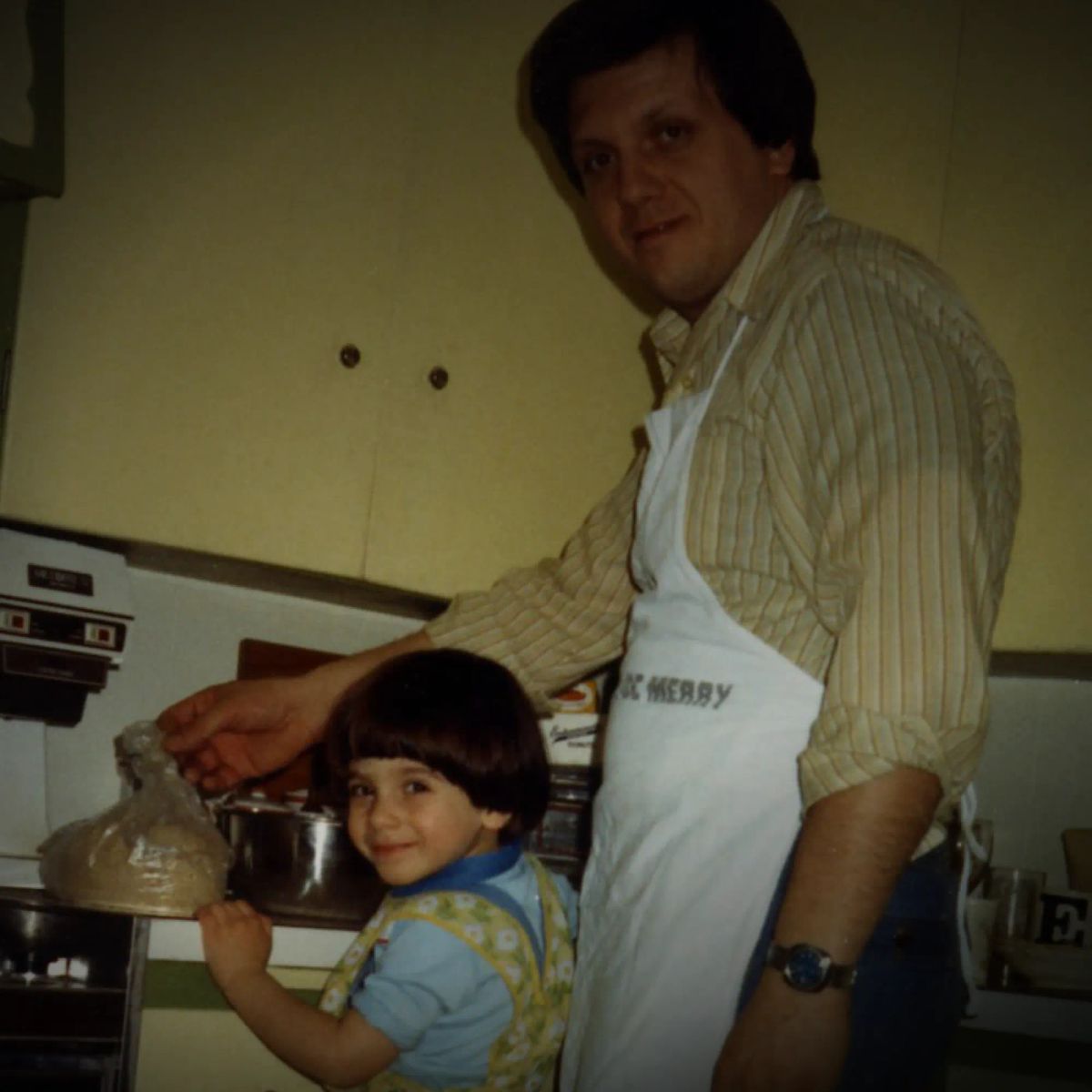
My first memory is sitting in a high chair in front of a small Zenith television. The opening credits for a sitcom played, maybe Happy Days or Laverne & Shirley, and there was a shenanigan that involved kissing a mannequin. It scared the hell out of me, and I screamed until my father patted my head, called me “big guy,” and changed the channel. For years, my mom couldn’t take me into a department store because I was so horrified by mannequins. Much of our shopping at Sears took place with her hand over my eyes.
Why do some encounters alter our perception while others leave no trace? C and I have been discussing resonance quite a bit these days, now that everything feels both more customized and predictive yet also more chaotic. She described resonance well in episode 42, and I’m increasingly convinced an event, idea, or image sticks only when it is unexpected and half-understood.
2
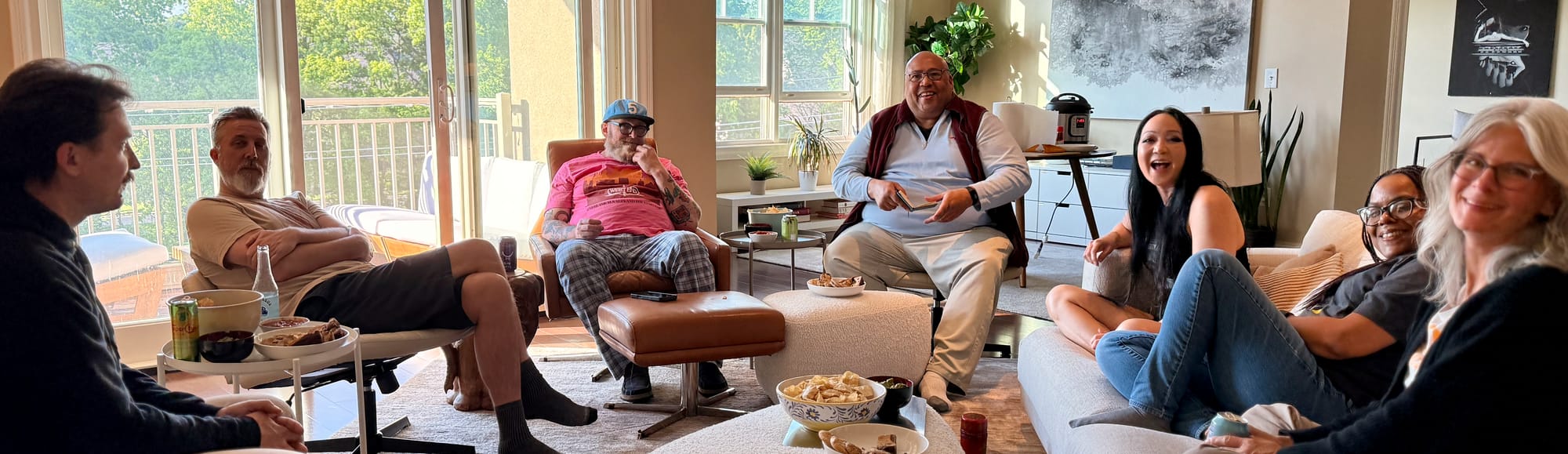
Last week, eight of us gathered to eat tacos and cookies and analyze our dreams. There were vicious doppelgängers, teeth in the sink, and berserk sports fans. We talked about killing crocodiles, getting crushed by giant orbs, and being forever stranded in a terrifying zone that C calls “the video place.”
Some dreams feel profound, even seminal, while others are dismissed as a strange entertainment. I’ve begun to catalog my dreams after finding a tranche of family photos from the 1970s. Most of these snapshots make no sense to me, and not just because I wasn't around then. They are chaotic inbetween moments, off-kilter scenes that capture the heat of family life without any concern for their presentation to the world. A different time. But these pictures feel like they belong with my twenty-first-century dreams. This pairing feels right even though—or perhaps because—trying to explain why fails.
2.5
There’s also a Barthesian can of worms regarding the subliminal meanings that emerge when an image is joined with text, such as the being there and the having-been-there. But thankfully for all of us, I have no interest in semiotics tonight. I mention Barthes only because he dismantled a pasta advertisement in search of "authentic Italianicity"—and tonight’s Special Guest is quite authentic and Italian.
3
My friendship with Andrea Mazzariello has been unexpectedly resonant. We met seventeen years ago on the subway after attending an educational function that neither of us can recall. He thinks it was at the Cloisters but I remember the Bronx Botanical Garden. Either way, we had plenty of time to discover we shared strong opinions about music and writing. These were days of isolation in the months following my mother’s death when I was living in a small flat in Greenpoint, caught between lives in Detroit, New York, and Helsinki. For reasons that remain unclear to me, I decided the logical move was law school in New Orleans. (I lasted a year before realizing I did not want a life of conflict.)
A. and I stayed in touch over the years, ambiently popping into each other’s feeds while we hopscotched around the country, both winding up in Vegas at different times. A few years ago, we discovered we were both writing novels and that our loved ones were tired of hearing about it. But we had each other. Our monthly calls appear in my calendar as Star Demon, a name whose origin I can't quite recall, but it makes for an obvious episode title.
Last month, I visited A. in Minneapolis to hear him read his novel to an audience, and it was a thrill to see how far it’s come from its first draft. And just as I can't explain why a sitcom mannequin haunted my childhood, I'm not quite sure how a subway conversation became a seventeen-year friendship that led to tonight's very special episode.
4
A. is a ridiculously gifted musician, a fact I’m only now beginning to comprehend. It's an interesting sensation, suddenly discovering your friend can sing. For tonight’s episode, he sent me eight gigabytes of stems from his latest album and said I could have my way with them.
Although A. is one of the most generous people I know, someone who is truly and cheerfully engaged with everybody in his life, I was intimidated nonetheless. I don’t understand the mechanics of music, but suddenly I had 364 .wav files performed by real musicians who knew all about chords and measures. I mean, A’s job title is Professor of Music, for god’s sake, and he teaches courses called “The Principles of Music Creation” and “Introduction to Music Technologies.” Meanwhile, I once asked C. which notes are the good ones, and she smiled politely.
But eventually I began do what I like to do: I slowed everything down and marinated it in reverb until it sounded a little hypnotic, and I can’t remember the last time I had such fun playing with music. So thank you for this unexpected delight, A.
5
But first, A. must answer the official Midnight Radio interview question:
Do you believe in god or any spiritual dimension to the universe?
“I was raised Roman Catholic, like many first-gen Americans of Italian parents. In retrospect it makes sense as a helpful extension of the assimilation mindset: follow the rules. I was definitely a rule-follower. I wore a scapular so as to land in purgatory instead of hell. I became a soldier of the church and took the name Michael. For the Archangel. I wanted a reason to fight.”
“In college I would go to folk mass. This is what broke me. Panic and hyperventilation, even though everyone seemed nice. Wealthy. Monogrammed backpacks, existential comfort.”
“I hung onto some God-notion with various nuances and exceptions. Then I started having trouble that didn't seem to map onto any of the metaphysics and that was that. I realized I had no memory of ever feeling like I experienced anything on the order of God, or felt any comfort in any of the rituals, teachings, or documents. It seemed to live in the same domain as whatever else one does to get into college, not get in trouble at home, and make gainful employment more likely.”
“When you die it goes to black became my operating premise. It helped me make the decency project even more defensible: Nothing matters but this, so be tolerable to those around you. Same motivation as building a sand castle or stacking rocks or playing a string quartet on the deck of the Titanic. Ship is going down, so you can choose beauty and gentleness or you can feel entitled to something other than the world as it is. The former won every time. Still does.”
“That easy decision, that obvious this-versus-that impulse doesn't come from nowhere. There is a valence to the allegedly blank slate that I feel in my bones. Maybe at some point religions x y z were in intimate contact with that lovely leaning towards goodness, maybe some still are. But it strikes me that you have to make a lot of excuses and take a lot of interpretive license in order to get what my direct experience tells me: We have choices. When push comes to shove I can't help but lean towards care. I don't know why, but it feels like God.”
6
Maybe it's the simultaneous knowing and not-knowing that makes anything resonate. Tonight we have some half-understood Midnight Radio variants of six songs from Andrea Mazzariello's War Footing playbook—rewired, filtered, and slowed down between 21% and 93%:
- Fair Is Foul Is Fair (Astronomical Dub)
- 43:1 (Tranquil + Justified)
- Aspirational Gardening (Cosmic Harvest)
- 80s Death (Redshifted + Microwaved)
- Post Nova (Initial Singularity)
- Pre-Post (Final Singularity)

