This is the last day of the longest month many of us have ever known. I stood in a Soviet line outside a Walgreens, waiting for somebody to exit so I could enter. I paid for my cans of food by pecking a Q-tip on a touchscreen. Mayonnaise is sold out everywhere for self-care reasons. Don’t shake out your dirty laundry, the television says. You might release a viral cloud. Tonight a nightly news anchor broadcasted from his basement because he’s infected now.
Taking a cue from Italy, each night at seven o’clock, we cheer for the nurses, doctors, grocers, and transit workers in New York City. It’s a small performance, but it’s something everyone can afford to do, the non-essential cheering for the essential, a rare act of communion in these days of isolation. Hopefully, this sentiment will continue long after this dark season ends and carry us into the streets to rebalance the scales and put on a more convincing show.
It’s a shared breath of life, this sudden clang and holler, the burst of animal noise from a wounded city. And there’s something unexpectedly moving about seeing my neighbors gathered at their windows at the same time, my brain finally mapping so many half-familiar faces to these buildings that I know like my name. There’s the guy I’ve always wondered about, the one across the street who leaves big chunks of bread on the fire escape for the pigeons. The one I’d thought was sad and lonely. He’s grinning and banging on a pan.
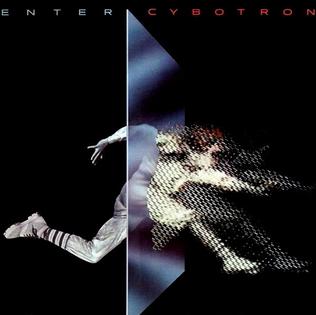
Another landmark track in the Electrifying Mojo’s rotation. Created by a group of Detroit teenagers in 1981 to promote a party, this is the dot between Kraftwerk and techno.
New York City. Another blank grey day when nature is still figuring out how to get to spring. We live among scenes unthinkable. In Nevada, they’re painting spaces in parking lots for the homeless to sleep, a grid of socially distanced squares like a demented board game. While picking up the laundry for my neighbor, I passed a woman walking a tiny dog. She wore shorts and a t-shirt and her head was covered by a bank robber mask, scuba goggles, and an insectoid breathing apparatus like she was taking an exploratory walk on a hostile planet. And I guess she was.
Seems like more people are smoking these days, although maybe I just want a cigarette. They puff on stoops and exhale in doorways, their faces defiant to these days of dangerous respiration. Meanwhile, I’m reverting to the diet of a five-year-old. All I want to eat are peanut butter and jelly sandwiches.
Two phrases collided in my head today: Hans Arp’s century-old complaint that “today’s representative of man is only a tiny button on a giant senseless machine,” followed by John Berger’s description of “a smile that comes after the tragic has been assimilated.” That smile feels a long way off.
We check the death tally each morning like the weather report, the mind doing everything possible to comprehend numbers that started in the tens, followed by hundreds, and now we’re reaching thousands. Rhode Island is hunting down New Yorkers, sending the National Guard to conduct door-to-door searches. The president spent the afternoon loudly mulling over a quarantine of New York City.
Each headline is more disorienting than the last, and uncertainty is breeding baroque conspiracies. Some say the virus is a political hoax invented by the Democrats and Chinese. They say the director of the National Institute of Health leads a shadowy cabal determined to overthrow the president. Each time he touches his forehead on national television, he’s communing with satanic energies. Strange how the knee-jerk anti-authoritarianism of the conspiracy theorist leads to blind faith in imaginary forces: the Illuminati, a wicked godhead.
Lately I find myself asking, “What’s the most comforting thing I know?” Last night I remembered the Electrifying Mojo.
His voice rumbled through Detroit’s airwaves from the 1970s into the 1990s as he announced b-sides from Parliament, Kraftwerk, Devo, and Cybotron, priming the pump for today’s music. He is a man without biographical detail but his fingerprints are everywhere. He is a concept that requires a definite article: The.
The Electrifying Mojo is a ghost, never photographed yet his spirit runs through almost everything we hear. Each night, he opened his show with a question: Will the members of the Midnight Funk Association please rise?
And the theme from Star Wars would play.
I want you to show some solidarity tonight. If you’re in your car, flash your lights. If you’re sitting on the porch, blink your porch light. And if you’re in bed, then dance on your back. In Technicolor.
He was the first deejay to put Prince on the air. He rocked a twenty-minute version of “Flashlight.” He interrupted songs with social commentary from his “mental machine.” I stayed awake into the small hours with my hear cupped to the speaker, hunched over my cassette player and riding the pause/record buttons to make mixtapes culled from his show.
120-minute Maxell cassettes were best for this.
Every night he signed off with the same message, delivered in a baritone with a grin around the edges.
Whenever you feel like you’re nearing the end of your rope, don’t slide off. Tie a knot. Keep hanging. Keep remembering that ain’t nobody bad like you.
I was fourteen years old.
When I got my driver’s license, I would sneak out and drive down Woodward Avenue into the city.
If you’re in your car...
A white Cadillac in the opposite lane flashed its lights, and I did the same in my beat-to-shit Pontiac. Two strangers responding to a voice on the radio, drawing the city into a brotherhood of sound and light.
One of the formative songs that the Electrifying Mojo played. Forty years later, you can still see the steam rising from the street. Read more about Mojo here and you can hear his voice here.
Each day is a copy of the last. Make coffee. Make phone calls to make sure nobody has a fever. Watch the governor’s briefing about personal protective equipment and ventilators. The numbers are scary. Refresh the news. The numbers are scarier. Spikes and hot spots. Today America became number one: more infections than China even though we have a third of the population. Our political dysfunction has degraded into negligent homicide.
People stand in the street, just staring at the sky.
A woman in Pennsylvania walked into a grocery store and intentionally coughed on the produce, meat, and bakery items. The store had to throw away $35,000 worth of food and she was referred for a psychiatric evaluation. Meanwhile, a man in Missouri filmed himself licking the merchandise at a Walmart while asking, “Who’s afraid of the coronavirus?” He was arrested and charged with making a second-degree terrorist threat.
We stand in the street because there’s no place for many of us to go. We go outside simply to go outside. The optics feel wrong, more like a simulation than reality; it’s eerie to see New Yorkers so evenly spaced apart.
A neighbor asks if I can take a letter to the post office because she can’t leave her apartment. I am profoundly nonessential in this crisis but at least I can do this. And I’m grateful for the clarity of walking from Point A to Point B.
A late-night walk through the city to pick up some supplies and leave them outside my elderly neighbor’s door. I knock lightly and walk away like a prankster. So much can change in a week. I hear the undoing of a lock and her voice calling behind me. “Thank you, darling. Pray for me.”
The twenty-four-hour Walgreens on the corner is closed. Like a tragic bird, I smash into its sliding doors, expecting them to slide open. New York’s babble and hum have been muted. No more honking, laughter, or drifting music. You can hear your footsteps. And sirens.
Tonight I’m gripped by a wild urge to kneel in a church even though I have no religion or semblance of otherworldly faith. I think about the padded bar that flips down to cushion your knees, if it has a liturgical name or whether some denominations consider this a form of cheating. I think about the origins of the word knee, short and stabby.
I once heard a street preacher holler that we must drop to our knees and atone because kneel comes from the Latin for to know. Or that Leonardo da Vinci believed compressing the nerves in the knee generated spiritual thoughts. I don’t think any of this is true, this garbled information that came from god knows where. But these days kneeling before a neighbor’s door—or next to my bed while mumbling a makeshift prayer—is beginning to make some kind of sense.
A hush fills the city, a sense of bracing for a blow. We know things will get worse. We watch the governor’s briefing each morning and listen to him beg for ventilators. The New York Times provides infection maps that turn blood red if you scroll too far into the future. Some politicians suggest letting the elderly and vulnerable die so we can keep the economy humming. America deserves a plague, but not its people.
I need to buy bread. There’s a line at the corner bodega. We stand six feet apart as instructed. The woman in front of me wears pajamas and cradles cans of tomato soup like a child. I do my best to maintain the six-foot distance, repeating this phrase in my head until I realize I’m thinking six feet under. Maybe there’s a connection between distance and depth. Fear of disease from the dead as well as the living. Graves dug deep enough that people couldn’t climb out.
“When I get the blues, I need to go outside,” I hear an old man say. “Otherwise the bad juju starts bouncing off the walls.”
Fumbling with my telephone to check the news, I accidentally press play on an old audiobook. A leathery British voice says, “He had a controversy with an Irish bishop who believed there are other worlds than ours, but was nevertheless canonized.” I spend the rest of the day returning to this sentence as needed, clinging to its mystery and meaninglessness like a koan.
This is dedicated to the nighthawks and graveyard shifters, you beautiful enemies of sleep. My schedule has drifted into the late-night hours during this season of sheltering in place. After several miserable experiments with eating yogurt and saying hello to the sunrise, I’m no longer kidding myself. Accepting that I’m nocturnal in my bones brings the same relief as walking away from a bad party.
Strange how staying awake past midnight feels like rejecting the premise of wholesome citizenship. “Thought leaders” and self-improvers love to crow about waking up at six o’clock in the morning; nobody brags about waking up at ten. There’s a moral dimension here that must be destroyed. I’m proud that I wait until deep into the night before I go outside to look at the sky or run through empty streets. This is social distancing.
Recent sleep studies suggest our circadian rhythms are deeply ingrained, that the “night owl gene” plays a critical role in the survival of animals that live in groups. These species fare better when some members watch over the others at night, protecting them from predators, a trait that has persisted from the ice and stone ages through these days of neon and sodium lights.
The “sentinel hypothesis” is a love poem to the long-haul truckers and security guards, the swing shift nurses and factory workers, the insomniac writers and music-makers. We are proud descendants of the honorable night watchman.
Each new headline reads like something from a schlocky dystopian thriller. A senator who hates the government has tested positive for the virus. So has a famous opera singer. The chancellor of Germany is in self-quarantine. Fiction feels like the only workable reference point these days.
I spent the morning scrolling through images of empty highways and blank parking lots that look like a new form of land art or maybe a message to the gods.
Meanwhile in New York City, a lone fruit stand on First Avenue plays The Bee Gees at high volume. “How Deep Is Your Love” fills the empty street, echoing across the shuttered storefronts while I get a bit misty-eyed.
Like the stages of grief, denial leads to anger. For two months, our government denied what was happening before our eyes. We watched the infections bloom across the map. We knew the virus was coming to America, yet the White House did not do a thing. They shook each other’s hands at press conferences and encouraged us to do the same. Keep shopping, they said. Keep working. At least two senators dumped their stocks just before the pandemic began.
Now we stay home and watch the death toll climb while doctors beg for medical supplies. We listen to health experts on television deliver surreal advice like, “Always do your best to wipe everything down.” We watch wealthy senators give cash injections to corporations even though it’s clear who is truly essential to society: the doctors and nurses, the truck drivers and grocers, the cooks and delivery workers.
Once this is over, and we’re allowed to gather outside again, I hope we take to the streets for all kinds of reasons.
We shelter-in-place while the television counts the infections and the people who’ve died. They keep the numbers in the corner of the screen like the scoreboard for some dystopian sport. We take breaks from the news, trying to find whatever scarce poetry can be found in social-distancing. We walk outside simply to walk outside. Seeing the sky feels more important than before. Maybe because so many other interactions have been flattened behind a screen.
My sense of the virtual and the real is beginning to blur. Looking up at the first day of spring, I remember a museum exhibit meant to look like a Japanese garden. I get weak in the knees whenever I stand beneath an artificial sky. A ceiling painted pale blue. Diffuse lighting. An artist’s rendition of clouds. There’s a blush of dopamine, an uncoiling of the nerves. The smudged memory of doing arts and crafts in a classroom while a storm beats against the windows. A painted sky jacks into a childhood fantasy of living in a diorama, of inventing better worlds without any sense of time. It’s a premonition realized, a glimpse of the future that leaves my brain humming with aerodynamic names like Spaceship Earth, Biosphere, and the tape-recorded skies of Neuromancer’s Freeside.
There’s also dread. I remember the illuminated photos of cherry blossoms in the drop ceiling of the hospital room where my father lay dying. Recreating something natural echos the psychic disturbances of clowns. The happiness without reason, the painted smile that must conceal an awful expression underneath—else why the make-up? A climate-controlled room promises protection from nature’s unpredictability and violence, yet sooner or later you wonder what might be going wrong beyond its walls.
A representation implies the real thing must be lost, ruined, or otherwise unavailable. And there’s a connection here that I cannot quite articulate without sounding clumsy, some deep-boned fear that the screens we inhabit today are becoming a replacement for something that can no longer be salvaged.
The glorious sound of power lines humming on a summer night. Fripp suggested naming this track ‘The Transcendental Music Corporation’ but Eno worried this would “make people think they were serious.” An interesting point: ‘transcendental’ is chained to earnest New Age jargon whereas there’s a wink behind ‘heavenly’, an acknowledgment of its impossibility.