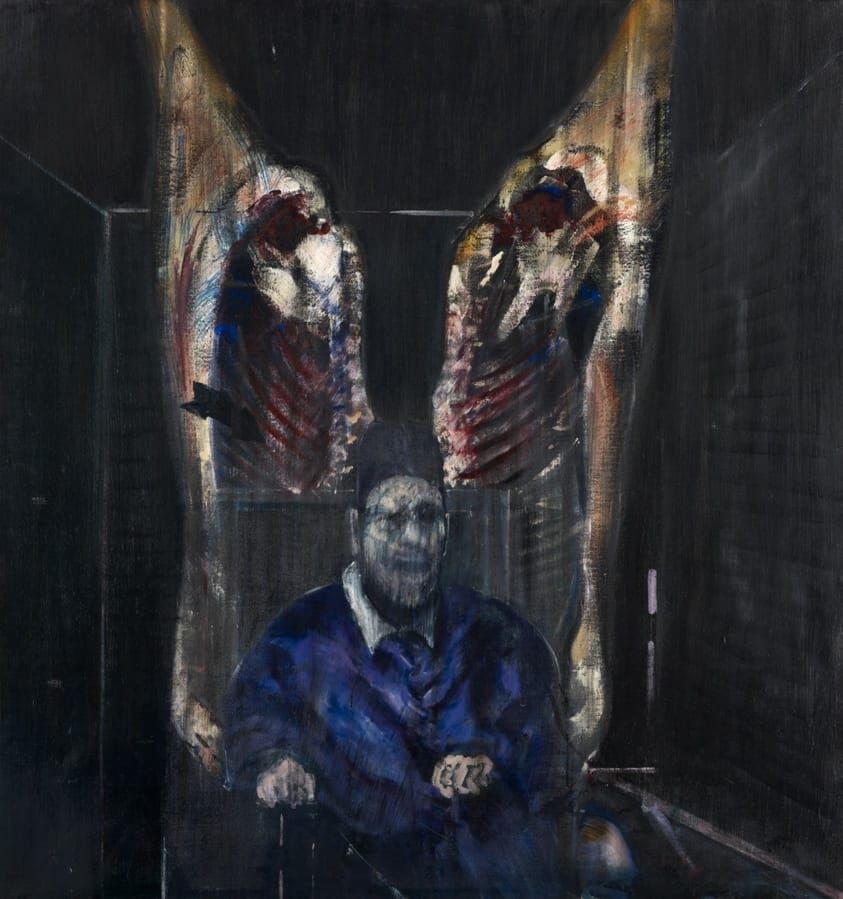
Francis Bacon
There are many reasons Bacon's Figure with Meat bothers the mind. It's a crazed smear of flesh, velvet, and bone, but it lingers because his shrieking popes inhabit a space that cannot be determined, a zone etched only by a few ghostly chalk lines. The ambiguity forces us to supply our own nightmares that pulse in the murk beyond the grasp of language. Which is the point of painting, I think. And perhaps horror, too.
Bacon described the crucifixion of Christ as “just an act of man’s behavior,” yet his depiction of it looks more otherworldly than anything the Catholics conceived. Bad weather fills Bacon’s canvases: damp and clammy, the faces of his subjects melting in the rain. But here’s reverence for death here. His ghoulish scenes demand to be taken seriously. “I think most artists are very aware of their annihilation,” he said. “It follows them around like their shadow.”
But those mouths. More specifically, the teeth. His realistic snarls provide an entry point into the surreal, for the dissolution of logic into something more real. My eye struggles to understand the face before me, even though it already makes sense, for it exists deep in the basement beneath words and speech, somewhere among the limbic muck and heat of being a panting, living mess.
Bacon believed in “an area of the nervous system to which the texture of paint communicates more violently than anything else.” I think he’s right.

