1
I’ve come to believe that getting spiritualized means learning to stand in the center of a storm of paradoxes. I picture a storm because there are so many charged collisions between opposing truths that they threaten to spill.
Examples:
- Only when I do not think about sleep can I fall asleep.
- Staying sober—or committing to anything, really—requires a silent, contradictory wish: take it one day at a time so I can do it for the rest of my life.
- Set an intention but do not allow it to become an expectation.
- Lightness is a form of seriousness. By recognizing the absurdity of my thoughts and desires, I relate to the people in my life more seriously.
- The desire to believe is belief even if it feels like cheating.
- Create routines so they can be abandoned.
- Aggressively attempting to remember a dream guarantees it will evaporate. For instance, last night I dreamt about a houseplant that began to drag itself across the floor to kill me. But now the rest is gone.
2
In 1995, the United States banned Richie Hawtin from entering the country due to border paranoia after the Oklahoma City bombings. "I remember going home after being in detention for six or seven hours and just crumbling on my mum and dad’s floor because it was like my career was over," he said. "My girlfriend was living in Detroit, all the parties we were doing were in Detroit—it was everything that Plastikman had become. It was like cutting the umbilical cord. It changed everything for me."
For a year he remained in Canada, where he cast off his acid Plastikman persona and committed to releasing a new record every month, which was not easy to do in 1996. The resulting 24 songs in the Concept series, named only by month and number, were an exercise in stripping techno down to studs, setting the stage for his masterpiece, Consumed.
Thirty years later, I try not to think too hard about the middle-agedness of it all—how listening to a Concept record today is like listening to Percy Sledge or Simon & Garfunkel in 1996. But there’s a night and day difference between music in 1966 and 1996. I don’t think the same can be said of 1996 and 2026. Hawtin’s Concept series still sounds like the future.
Even if I didn’t think so at the time. A stoned college sophomore with no money, I bought the Concept record released in November ’96, eagerly took it home to my scuzzy little flat, and hated it. The seasick rhythms and erratic clangs, the sterile drums and hostility toward melody—it sounded cold and evil. When I played it for C, she got physically ill.
But I continued to listen until I began to appreciate it. Today I love it. These records are a conversation with the listener. They drift and breathe, fundamentally unstable and strangely animal. The offset of a snare becomes high drama. A glitched drum or an abrupt silence tells a story, and I marvel at how something so skeletal feels like some of the warmest, most generous music I know.
3
In 1996, my relationship with art and music was defined by concrete parameters. With only a few records in my collection, I had no choice but to learn to love an album. In the Age of the Algorithm, we have fewer opportunities to deal with the friction and patience required to come to art on its terms—to spend hours, let alone months or even years, wrestling with something until it clicks and you realize you love this thing because it’s been resisting your intention for it to be something else.
I think this relates to stepping into the eye of spiritual confusion: both require letting go. Yet another paradox: I must have some level of intention to let go, which can be the trickiest move of all.
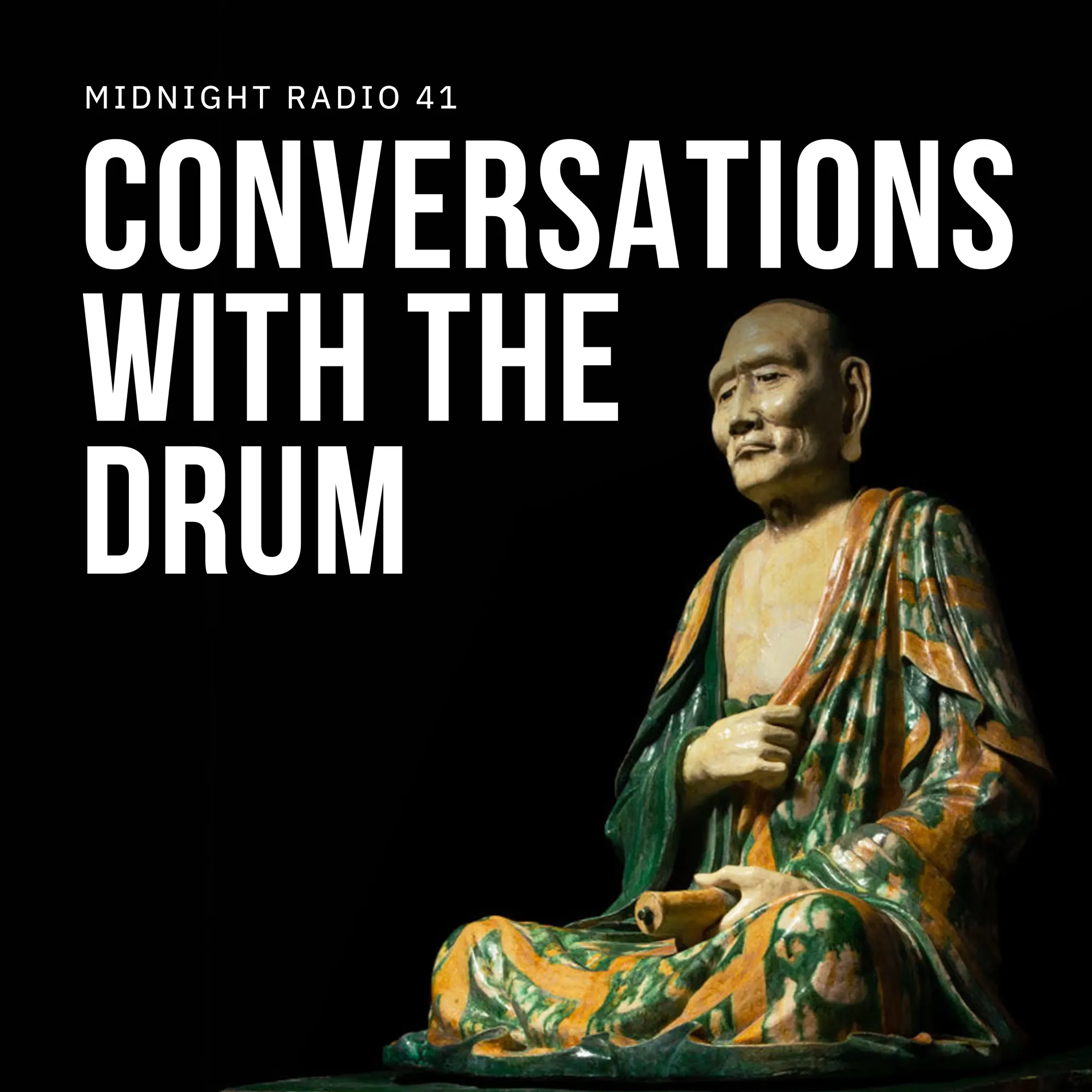
Perhaps it’s a matter of perception. Whenever C and I visit the Metropolitan Museum of Art, we stand before a giant ceramic arhat to be judged. Sometimes his face looks benevolent and I feel held—like I could remain there for hours; other times I wither beneath his glare and quickly move along.
4
I’ll admit, I flew too close to the sun on this one. First off, the Concept series has become such a personal landmark that it’s hard to approach it objectively. Of the 32 songs across these records, I have 23 favorites, which would be a four-hour mix. Eventually I had to turn the process of selection into an exercise in subtraction until I whittled it down to an hour.
Second, I’ve never been good at matching beats. It’s hard and boring. And these songs are phenomenally difficult to mix, filled with analog drift and reversed stutters as if they were designed to ratfuck any crossfade.
Thomas Brinkmann’s variations make this even more challenging. He built a custom turntable with two tonearms that had separate outputs for the left and right channels. By splitting the stereo field across two needles in the same groove, unexpected rhythms and phase shifts emerged, creating what Brinkmann described as "a little intervention and displacement of elements."
There's a lot of displacement in tonight's tribute: hard cuts, truncated tracks, and rips of static—but I've savored the past two weeks I've spent immersed in these songs. When I listen to them today, I hear the wild sense of play that only emerges from routine and parameters; I think about the commitment to a regular cadence that teaches one to live with imperfect results. Most of all, these tracks succeed because they are a dialogue with the listener: they stake out a rigid framework so expectations can be fucked with. The spiritualized zone lives in the delightful space between what I think will happen and what actually occurs.
- 96:01 01:00
- 96:01 02:00 VR
- 96:05 09:00
- 96:05 10:00
- 96:07 13:00
- 96:08 16:00
- 96:11 21:00 VR
- 96:12 23:00
- 96:12 24:00 VR
Richie Hawtin - Concept 1 96:12 | Bandcamp
Thomas Brinkmann - Concept 1 96 VR | Bandcamp