1
This is a time of synchronicities and spiritualized encounters—and I'm aware this is the sort of thing a crazy person says. This is why I tend to deny anything that seems mystical or improbable. Pattern recognition, I tell myself. Frequency illusion, that's all.
Because if I attempt to explain a moment of grace, it gets suffocated by words. Or maybe I'm afraid to think about it. Reverence and anxiety belong to the same coin, and I do not want a divine beam of light drilled into my skull. I couldn't handle it. I'd rather admire the beam of light from a safe and respectful distance, comforted to know it exists but not delusional enough to think it's for me.
Or perhaps I am vain and far too worried about sounding like an insufferable self-care grifter who talks about how the universe told them to get bangs.
2
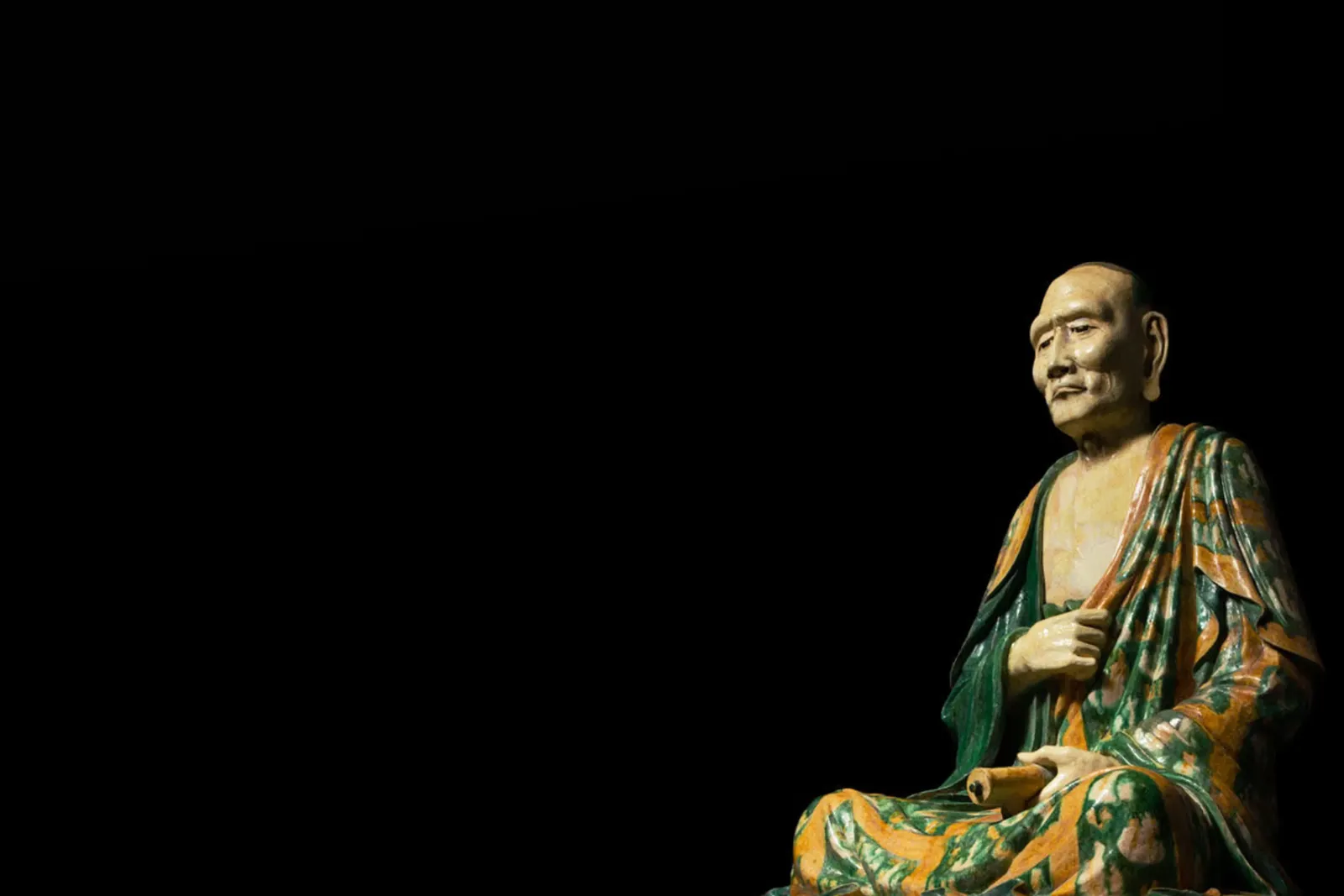
I often think about Leonard Cohen's observation that religion is the greatest form of art. When I'm moved by a painting, I am not thinking about its veracity. I do not question whether my emotional response is true.
With thoughts like this in my head, I'm grateful that Martin Essig will join us tonight to talk about the history of faith.
M. first appeared in episode 23 to tell us that desire is a demon. Because synchronicities abound, he came into my life at a time when I was grappling with faith, and he was hellbent on making sure I understood symbolic failure and the Lacanian Real. Along the way, he became a reliable friend, ensuring that I never wander too far into doubt or belief but instead learn to enjoy the dance.
Tonight M. will discuss animism and disenchantment on top of some songs he selected, several of which I've bludgeoned into unrecognizable shapes. But first, he must answer the Very Special Guest Question.
3
Do you believe in god or any spiritual dimension to the universe?
"I guess the real question is: Does God believe in Himself? I prefer a God who isn’t really sure if He exists or not. In all the best religious experiences, nobody’s certain about what’s going on, including and especially God."
"When God showed up in a whirlwind and upbraided Job about how he wasn’t there at the foundation of the Universe, God starts talking about those weird and heady creatio ex nihilo times all cool like were you there when Deep calls to Deep? and this sounds badass, but then God gets lost in rambling about Behemoth and Leviathan and stuff that nobody’s sure why He made or what exactly they even are—but God wanted to seem like He was in more control than He actually was."
"God reveals His unconscious in this diatribe when He disavows His part in the evil that Job is suffering. Jung interpreted God’s "shadow self" as His repudiation of His relation to His son Satan—which is to deny that if you are the author of everything, then you are also the instigator of evil."
"For me, God’s shadow is ambiguity, which is His inability to determine all there is of the Universe. In other words, God has an unconscious just like the rest of us. He can’t be omnibenevolent because of His part in the evils of the world. But this lack of at-oneness, this lack of control, allows for whatever cool but incomprehensible stuff might follow from this impotence."
"My favorite Talmudic passage depicts rabbis arguing about the Oven of Akhani, which was a dispute about the purity of said oven for kosher cooking. God shows up to settle the controversy because it's His law after all. But Rabbi Joshua tells God that He doesn’t have a say in the matter since the Torah is in their hands now."
"The gift of ambiguity is better than clarity because it is always open to
further interpretation, and the joy of humanity is the community of interlocutors that indeterminacy gifts to us. Belief as a test of faith was a huge mistake. Religion took a wrong turn when it started to lift up psychosis as its preferred position. Psychosis is fine and has its place, but neurotic doubt is an undeniable salve for too much belief."
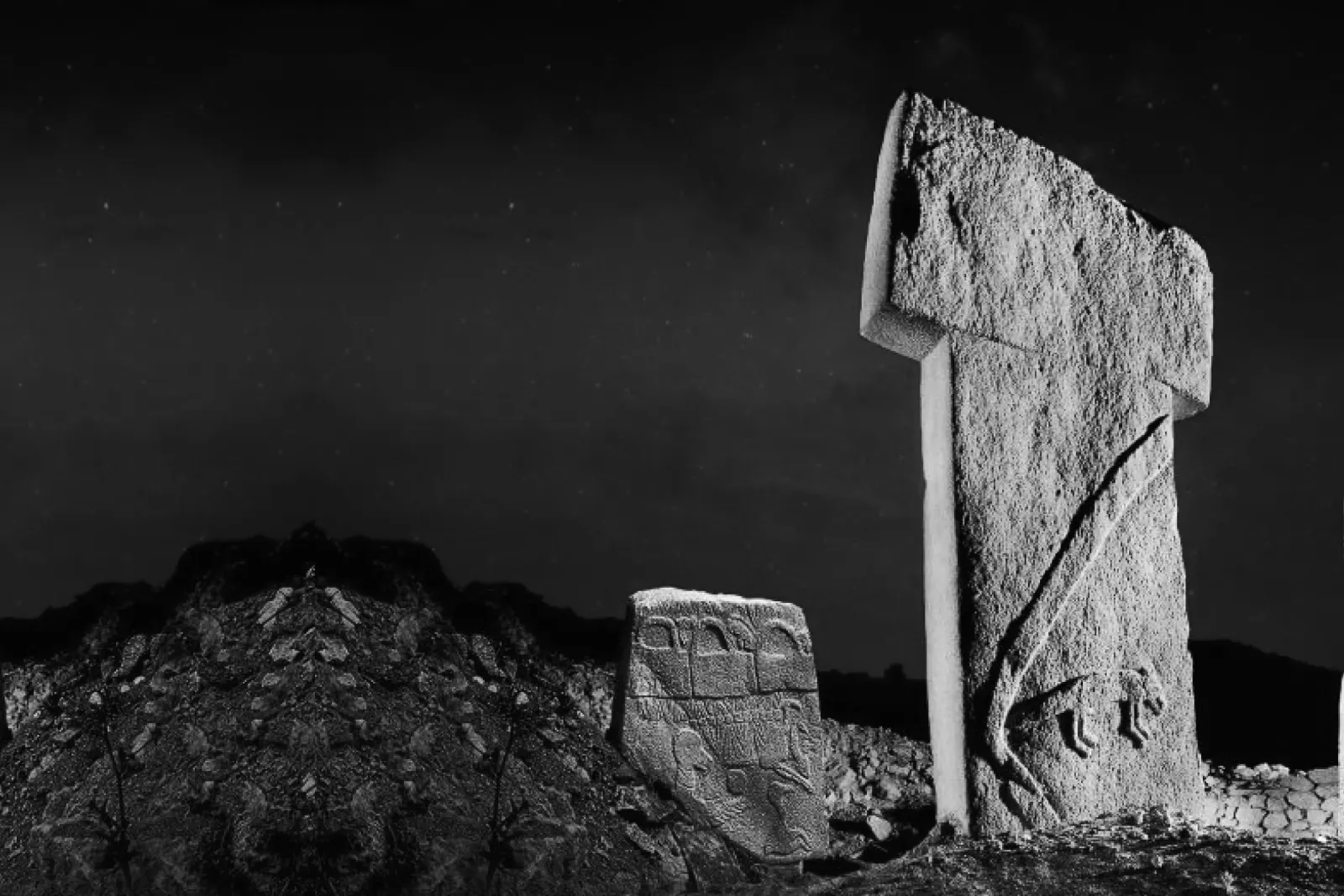
"I’m whatever religion they were at Gobekli Tepe. Religious practice should be a celebration of irreducible ambiguity. I was so excited when they uncovered Gobekli Tepe in Southern Turkey and Klaus Schmidt was like, “What the hell was going on here?” and decided it was a prehistoric zoo. Here was a city almost twelve thousand years old, built not for sedentary and hierarchical people but for the sacred practices of hunter-gathers who came together uncoerced to celebrate holy mysteries with ambiguous trickster gods in liminal spaces designed for music, dancing, stories, feasting, and shit-tons of carved animals doing stuff, like a vulture presenting an orb to a man without a head but with a prominent phallus, and the sublime wonderment of a submerged room with benches along the walls and loads of giant stone penises in the middle for some reason."
"Schmidt and countless others have speculated on what these people thought that they were doing there. I for one, perhaps naively, hope they didn’t precisely know what they were doing there. Hegel famously pondered the “mysteries of the Ancient Egyptian religions,” to which Žižek postulated that “the mysteries of the Ancient Egyptians were mysterious to the Ancient Egyptians too.”"
"Amen."
4
In tonight's broadcast, M. breaks down the human impulse to assign intentions to the unknowable. It's an impulse as old as time, and it left me wondering if a freaky new age of faith is upon us. The logic of today's artificial intelligence is inscrutable, even to its makers. Spend a few minutes working with a chatbot and it will begin to behave as if it has its own intentions.
New modes of magical thinking will emerge, but this time they will be customized and personalized, each of us kneeling in our own algorithmic temples rather than engaging in collective belief.
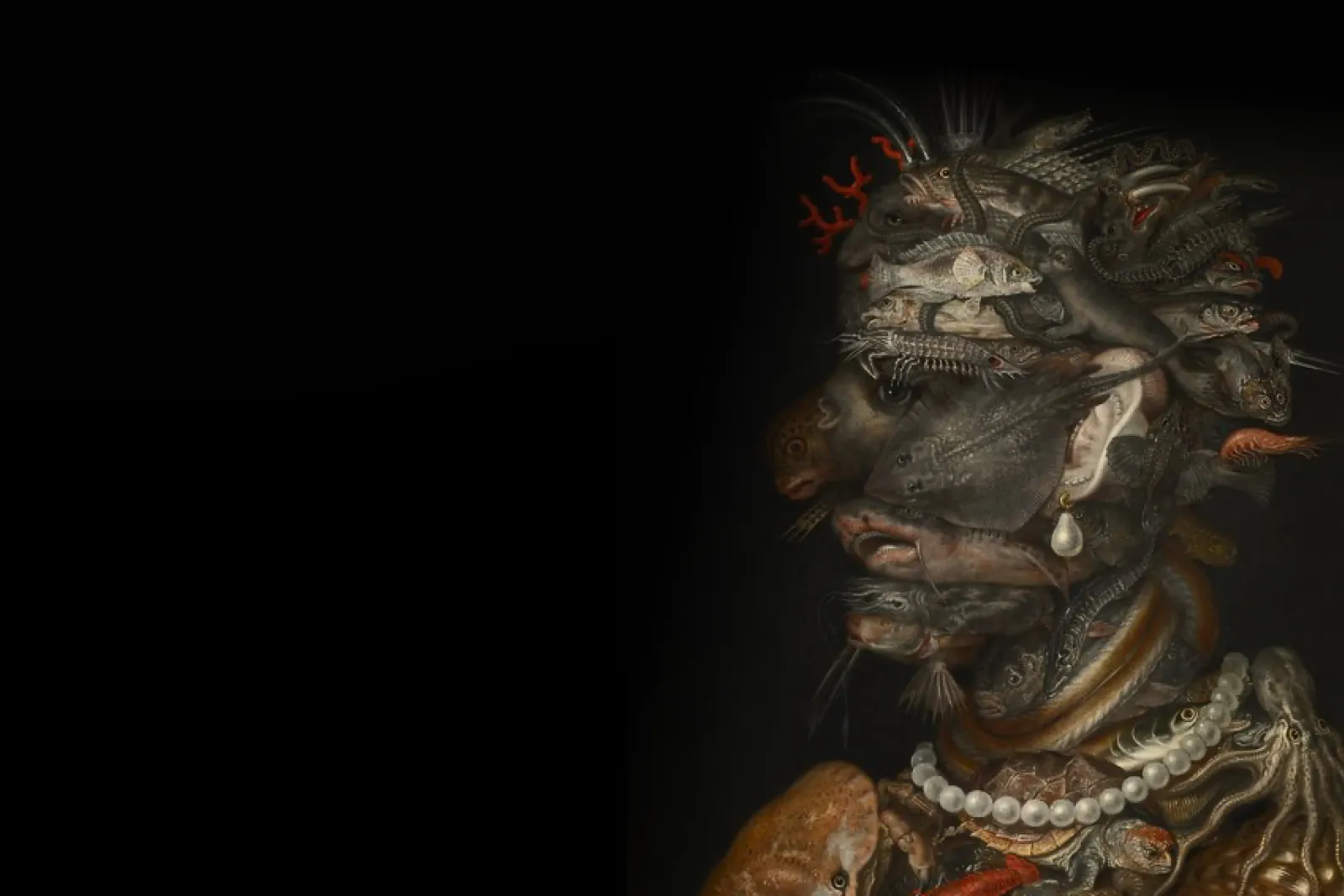
At least I'm having fun before the Singularity hits. For months I've wanted to add a video component to Midnight Radio but I never felt inspired enough to deal with the godawful interface of Adobe Premiere or the mind-numbing hours required to sequence a few video clips. Last night I fed Claude some of my favorite paintings, a Max Headroom reference, a painting from C, and an excerpt from tonight's transmission. Then I plugged it into a terminal window and watched as it generated video after video while I directed the aesthetic.
In this recent NY Times piece, Anil Dash observes that "in the creative disciplines, L.L.M.s take away the most soulful human parts of the work and leave the drudgery to you. And in coding, L.L.M.s take away the drudgery and leave the human, soulful parts to you.”
It was exhilarating and a little humbling to suddenly find myself liberated from technical barriers and left only with my own soulful human ideas. Here's what this first effort looks like:
And so onward, pushed forward by gods and robots and kick drums. M. sent me this playlist of fun (oftentimes French) songs, and it's highly recommended, especially if you'd like to hear Can do their best Parliament impression. I selected six of these tracks and lodged in some others that I think harmonize with his ruminations on being enchanted, disenchanted, and hopefully back again.
- XDCVR - Psalm 68
I Hate The Shit, I Hate All That Shit • Ooh Sounds, 2026 • Bandcamp - Luke Slater - Love (Burial)
Love Remixes • Mote Evolver, 2019 • Boomkat - Sun Electric - Episode VI
Episodes • Detuned, 2026 • Bandcamp - Blawan - 993
Nutrition • Ternesc, 2017 • Bandcamp - Jürgen Paape - So Weit Wie Noch Nie (Midnight Radio Edit)
Total 3 • Kompakt, 2001 • Bandcamp - The Field - Reflecting Lights (Kaitlyn Aurelia Smith Remix)
Reflecting Lights Remixe | Kompakt, 2016 | Bandcamp - Kakuhan - Kak-Juk
KAK • Nakid, 2026 • Boomkat - Patche - Motorik (60% slower)
Patche • Popop, 2023 • Bandcamp - Can - I Want More (500% slower + filtered)
Flow Motion • Harvest/Mute, 1976 • Bandcamp - Babe Ruth - The Mexican (21% slower)
First Base | Harvest, 1972 | More
Thank you for listening.